Low Level Light Therapy
Photobiomodulation technology that stimulates healing at the cellular level — for dry eye, and now showing remarkable promise for age-related macular degeneration.
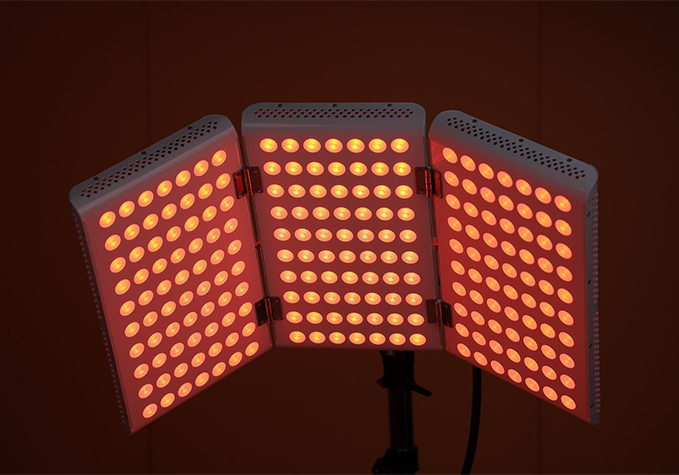
How LLLT works
Low Level Light Therapy, also known as photobiomodulation (PBM), uses specific wavelengths of red and near-infrared light to stimulate biological processes within your cells. The light energy is absorbed by cytochrome c oxidase in the mitochondria, boosting ATP production — the energy currency that drives cellular repair and regeneration.
This technology has its roots in NASA research, where scientists discovered that specific light wavelengths could accelerate wound healing in astronauts. Today, photobiomodulation is used across medicine — and its applications in eye care are among the most promising.
LLLT reduces oxidative stress, decreases inflammation, and improves local blood circulation. For eye care, this creates the ideal conditions for tissue healing — whether in the meibomian glands of the eyelids or the retinal cells affected by macular degeneration.
LLLT for dry eye disease
As the third pillar of our Dry Eye Trifecta, LLLT accelerates healing and extends the benefits of IPL and MiBo Thermoflo.
Boosts cellular energy
Increases ATP production in meibomian gland cells, giving them the energy they need to function properly and produce healthy oils.
Reduces inflammation
Modulates inflammatory pathways and reduces pro-inflammatory cytokines, extending and reinforcing the anti-inflammatory effects of IPL.
Improves circulation
Enhances blood flow to the eyelid tissue, delivering more nutrients and oxygen to healing glands and improving overall gland health.
LLLT for age-related macular degeneration
One of the most exciting developments in eye care is the use of photobiomodulation to treat dry age-related macular degeneration (AMD). Until recently, there were no effective treatments for this leading cause of vision loss in adults over 50.
LLLT delivers specific wavelengths of light that penetrate to the retinal pigment epithelium and photoreceptor cells. The light energy stimulates mitochondrial function in these cells, reducing the oxidative stress and inflammation that drive AMD progression.
Clinical trials have shown measurable improvement in visual acuity for patients with early to intermediate dry AMD. This is a groundbreaking development for a condition that has historically had no treatment options beyond nutritional supplementation.
Learn more about AMD treatmentLIGHTSITE III trial highlights
5.9 letter gain in visual acuity
Treatment group showed a mean improvement of 5.9 letters on the ETDRS chart at 13 months.
58% gained 5+ letters
More than half of treated patients gained a clinically meaningful improvement in visual acuity.
Excellent safety profile
No treatment-related adverse events reported in any of the LIGHTSITE clinical trials.
Clinical research
LLLT for eye care is supported by a growing body of peer-reviewed research spanning both dry eye and macular degeneration.
Stonecipher et al. (2019) — Clinical Ophthalmology
Retrospective study of 460 eyes showing combined LLLT+IPL produced statistically significant improvement in MGD grade, OSDI scores, and tear breakup time in patients unresponsive to prior treatment.
Markoulli et al. (2021) — Clinical & Experimental Optometry
Review demonstrating that photobiomodulation promotes tissue repair, decreases periocular inflammation, and improves meibomian gland function in patients with dry eye disease caused by MGD.
LIGHTSITE III — Markowitz et al. (2024) — Retina
Multicenter, randomized, double-masked, sham-controlled trial showing significant improvement in visual acuity and 58% of treated patients gaining 5 or more ETDRS letters at 13 months using the LumiThera Valeda system.
LIGHTSITE II — Parodi et al. (2023) — Ophthalmology & Therapy
Randomized multicenter trial confirming multiwavelength photobiomodulation improves visual acuity and slows progression in non-exudative dry AMD, with a strong safety profile across all treatment groups.
Frequently Asked Questions
Is LLLT the same as laser treatment?
How long does a session take?
Can LLLT help with macular degeneration?
Are there any side effects?
How is LLLT different from IPL?
What is the connection to NASA?
Financing your treatment
See what you qualify for in about a minute. Checking does not affect your credit score.
Discover what light therapy can do for your eyes
Schedule a consultation to learn if LLLT is right for your dry eye or macular degeneration.
Book a Consultation