AMD Treatment with Light Therapy
Photobiomodulation offers new hope for patients with dry age-related macular degeneration — a condition that until recently had no effective treatment.
What is age-related macular degeneration?
Age-related macular degeneration (AMD) is the leading cause of vision loss in adults over 50. It affects the macula — the central part of the retina responsible for sharp, detailed vision used for reading, driving, and recognizing faces.
Dry AMD accounts for approximately 85 to 90 percent of all AMD cases. It occurs when the retinal pigment epithelium (RPE) cells beneath the macula deteriorate due to accumulated oxidative stress and metabolic waste products called drusen. As these cells lose function, the photoreceptors they support begin to fail.
For decades, the only recommendation for dry AMD was nutritional supplementation (AREDS2 vitamins) and monitoring. Now, photobiomodulation is opening a new treatment pathway supported by rigorous clinical evidence.
How photobiomodulation treats dry AMD
LLLT works at the cellular level to address the underlying dysfunction that drives AMD progression.
Restores mitochondrial function
Red and near-infrared light is absorbed by cytochrome c oxidase in retinal cell mitochondria, restoring the ATP production that declines with age and oxidative damage.
Reduces oxidative stress
Photobiomodulation activates antioxidant defense pathways, reducing the reactive oxygen species that damage RPE cells and contribute to drusen formation.
Modulates inflammation
Chronic low-grade inflammation (para-inflammation) plays a key role in AMD. LLLT downregulates complement activation and inflammatory pathways in the retina.
Three wavelengths. Three targets.
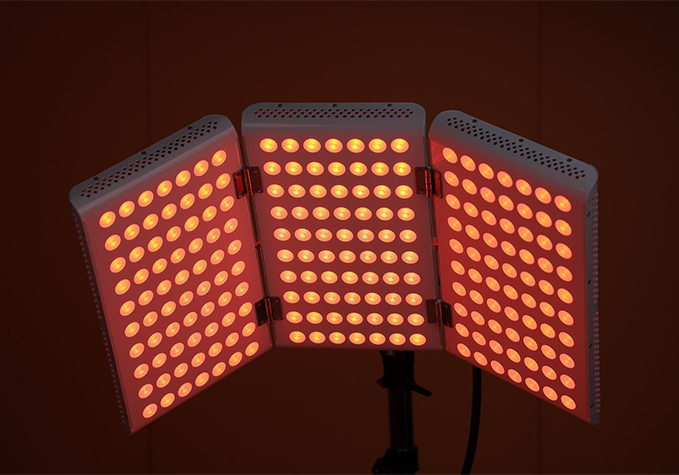
LLLT uses three specific wavelengths of light, each targeting a different aspect of the disease simultaneously.
Clearing Deposits
Yellow light targets lipofuscin, a metabolic waste product that accumulates in retinal pigment epithelium (RPE) cells and contributes to drusen formation. By helping cells process and clear these deposits, yellow light addresses one of the fundamental drivers of AMD progression.
Primary target: Drusen & lipofuscin deposits beneath the retina
Restoring Cellular Energy
Red light penetrates the retina and is absorbed by cytochrome c oxidase in the mitochondria of RPE and photoreceptor cells. This directly increases ATP production — essentially recharging cells that have become energy-depleted due to disease. Healthier, energy-replete cells function better and survive longer.
Primary target: Mitochondrial dysfunction in RPE & photoreceptor cells
Deep Tissue Repair
Near-infrared light penetrates the deepest, reaching the choroidal layer beneath the retina. It reduces oxidative stress, modulates inflammatory pathways, and stimulates metabolic activity in the supporting tissues that nourish the retina.
Primary target: Choroidal tissue, oxidative stress & inflammation pathways
Why all three matter: Each wavelength addresses a different mechanism of AMD. Yellow clears the buildup that causes damage. Red restores the cellular energy needed to function. Near-infrared reaches the deep tissue and quiets the inflammation driving it all. Clinical results are strong because all three work together simultaneously.
Clinical trial results
The evidence for photobiomodulation in dry AMD comes from well-designed, peer-reviewed clinical trials.
LIGHTSITE III
Markowitz et al. — Multicenter, randomized, double-masked, sham-controlled trial
The largest and most rigorous trial of photobiomodulation for dry AMD. Patients with early to intermediate dry AMD received a series of PBM treatments and were followed for 13 months.
5.9 letter gain in best-corrected visual acuity (BCVA) at 13 months in the treatment group
58% of patients gained 5+ letters — a clinically meaningful improvement threshold
Statistically significant difference between treatment and sham groups
No adverse events related to treatment in any patient
LightWave I
Merry et al. — 24-month follow-up study
An extended follow-up study that tracked patients who had completed photobiomodulation treatment for dry AMD over a 24-month period, providing evidence for long-term durability.
Sustained visual acuity improvement maintained over 24 months with maintenance treatments
Anatomical stability — no progression of drusen or development of geographic atrophy in treated patients
Continued safety with no treatment-related adverse events over the extended follow-up period
Treatment protocol
Our AMD treatment protocol follows the evidence-based approach used in the LIGHTSITE clinical trials.
Initial series
9 sessions delivered as 3 treatments per week for 3 consecutive weeks. Each session is approximately 5 minutes of light exposure per eye.
Assessment
After the initial series, we re-evaluate visual acuity, OCT imaging, and symptom response to determine the treatment effect and guide next steps.
Maintenance
Maintenance series every 4 to 6 months to sustain the treatment effect. Clinical evidence suggests that ongoing maintenance is important for durable results.
Who is a good candidate?
- Diagnosed with early to intermediate dry AMD
- No active wet (neovascular) AMD
- No advanced geographic atrophy involving the foveal center
- Able to attend 3 sessions per week for 3 weeks (initial series)
- Interested in a proactive approach to managing dry AMD
Important disclosure
Photobiomodulation for AMD is an off-label application of LLLT technology. While supported by promising peer-reviewed clinical research including the LIGHTSITE III trial, it has not yet received FDA clearance specifically for AMD treatment. Our doctors will discuss the current evidence, potential benefits, limitations, and what off-label means during your consultation so you can make a fully informed decision.
Frequently Asked Questions
What does "off-label" mean?
Is the treatment safe?
Will I notice a difference in my vision?
Does insurance cover this treatment?
Can I continue taking my AREDS2 vitamins?
What happens during a session?
Can this treat wet AMD?
Explore a new option for dry AMD
Contact us to schedule an AMD consultation and learn if photobiomodulation is right for you.
Request a Consultation