Myopia Management
Evidence-based treatments to slow nearsightedness progression in children.
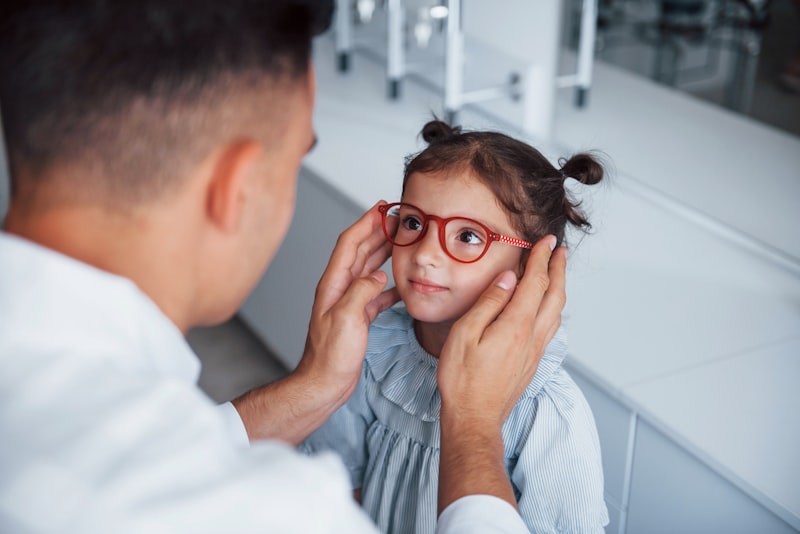
Myopia is more than just nearsightedness
Myopia (nearsightedness) is one of the fastest-growing eye conditions in the world. It makes distant objects appear blurry, but the real concern goes much deeper. As myopia progresses, the eyeball physically elongates, which increases the risk of serious conditions later in life, including retinal detachment, glaucoma, macular degeneration, and cataracts.
The earlier myopia starts, the more time it has to progress. That is why early intervention is so important. With the right treatment, we can significantly slow the rate of progression and reduce your child's long-term risk.
Myopia can develop as early as age 3, and it often progresses fastest during childhood and adolescence. If your child is squinting, sitting too close to the TV, or struggling to see the board at school, it is time for an evaluation.
50%
of North Americans projected to be myopic by 2030
Age 3
Myopia can develop in children as young as three
The good news?
Modern treatments can slow myopia progression by up to 59%, significantly reducing your child's lifetime risk of serious eye disease.
Proven approaches to slow myopia
We offer multiple evidence-based treatments and will recommend the best option based on your child's age, prescription, lifestyle, and needs.
MiSight 1 Day
MiSight 1 day is the first and only FDA-approved soft contact lens specifically designed to slow myopia progression in children aged 8 to 12 at the initiation of treatment. These daily disposable lenses use a dual-focus design that corrects distance vision while simultaneously sending a signal to the eye to slow its elongation.
Backed by a landmark 7-year clinical study, MiSight has demonstrated significant and sustained reduction in myopia progression compared to standard single-vision lenses.
- Daily disposable for easy, hygienic use
- Backed by 7 years of clinical data
- Comfortable and kid-friendly
Orthokeratology (Ortho-K)
Ortho-K uses specially designed rigid gas-permeable lenses that are worn overnight while your child sleeps. These lenses gently reshape the cornea, temporarily correcting myopia so your child can see clearly during the day without glasses or contact lenses.
Beyond the convenience of lens-free daytime vision, Ortho-K has been shown to slow the progression of myopia. The corneal reshaping creates optical changes similar to those produced by MiSight, sending signals that help control eye elongation.
- Lens-free clear vision during the day
- Great for active kids and sports
- Non-surgical, fully reversible
Low-Dose Atropine Eyedrops
Low-dose atropine is a once-daily eye drop that has been shown to slow myopia progression with minimal side effects. At very low concentrations (typically 0.01% to 0.05%), atropine reduces the signal that triggers eye elongation without significantly affecting pupil size or near focus.
This is often a good option for younger children who are not yet ready for contact lenses, or it can be used in combination with other treatments for a more comprehensive approach.
- Simple once-daily drop before bed
- Suitable for very young children
- Can be combined with other treatments
Soft Multifocal Contact Lenses
Certain soft multifocal contact lens designs have been shown to slow myopia progression in children. These lenses work on a similar principle to MiSight, using multiple focus zones to correct vision while creating peripheral defocus that helps control eye growth.
Soft multifocal lenses can be a good option when MiSight is not available in the needed prescription, or when a reusable lens option is preferred by the family.
- Comfortable soft lens design
- Available in a wider range of prescriptions
- Evidence-based approach to myopia control
Why early intervention matters
We understand that deciding on a treatment for your child can feel overwhelming. Our doctors will walk you through every option, explain the research behind each approach, and help you make a decision that feels right for your family.
Myopia management is not about a single product or treatment. It is about building a long-term plan that adapts as your child grows. We monitor progress closely and adjust the approach as needed to ensure the best possible outcome.
The most important step is the first one. If you have noticed signs of nearsightedness in your child, or if there is a family history of myopia, schedule an evaluation. The sooner we start, the more we can do.